
Jun 26, 2026chemical industry
Chemical Industry and Metal stamping parts
Chemical Industry and Metal stamping parts

Metal Stamping Parts: Applications & Benefits in Chemical Industry
Chemical industry stamping parts feature two core characteristics: high-grade corrosion-resistant materials and complex molded structures. Most adopt expensive, hard-to-process materials including titanium alloy, nickel-based alloy, Hastelloy and 316L stainless steel. Professional metal stamping processes form intricate irregular structures to maximize fluid contact area, meeting the extreme corrosion resistance and high-pressure working requirements of chemical production. Below are the key applications ofprecision stamping parts in chemical equipment.
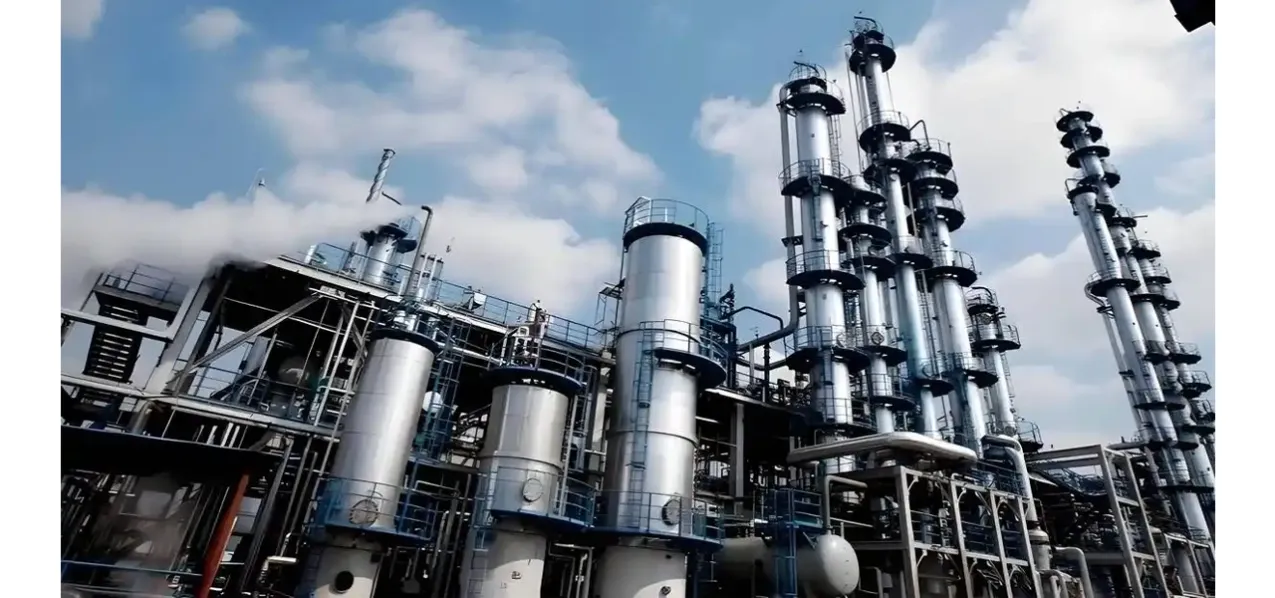
1. Tower Internal Components – Core of Chemical Purification
Distillation towers, absorption towers and washing towers require sufficient gas-liquid contact to complete material separation. Their core internal functional components are all customized stamped metal parts.Stamped Bubble Caps & Valve Trays: Typical deep drawing and punching stamping products with inverted bowl-shaped structures and edge grooves. They disperse rising gas into tiny bubbles through tooth grooves, penetrating the liquid layer to greatly increase gas-liquid contact area and improve separation efficiency. Movable stamped metal valve plates on tray holes lift with airflow to adjust gas circulation stably.Structured Packing: Made of ultra-thin stamped stainless steel or aluminum sheets through professional corrugation, punching and layered assembly. The stamping-formed corrugated structure provides a huge specific surface area, replacing traditional trays to achieve higher-efficiency chemical mass transfer and purification.
2. Plate Heat Exchanger Plates – High-Efficiency Energy Saving Core
Chemical production involves frequent heating and cooling processes. Precision stamped heat transfer plates are the key to high-efficiency, space-saving plate heat exchangers, widely used in industrial heat exchange scenarios.Adopting 10,000-ton hydraulic stamping technology, ultra-thin titanium plates and Hastelloy plates are pressed into complex herringbone ripple structures. The stamped ripples dual-function: strengthening the structural rigidity of thin metal plates and generating strong fluid turbulence. This effectively eliminates heat transfer dead zones and significantly improves overall heat exchange efficiency for chemical systems.
3. Filtration & Separation Stamping Components
Purification and impurity filtration are essential links in chemical raw material and product processing, relying on high-precisionstamped perforated metal parts.Perforated Sieves & Metal Plates: Processed by CNC precision punching, these stamped plates are drilled with dense round, square or slotted holes. They serve as filter media supports or complete direct coarse filtration for chemical fluids and particles.Stamped Filter End Caps: Metal end covers for industrial filter cartridges are integrally stamped. They feature high structural stability, firmly fixing internal filter paper and filter mesh to ensure tight filtration and prevent material leakage.
4. Piping & Sealing Stamping Parts – Production Safety Barrier
Chemical pipelines transport toxic and harmful media, requiring absolute sealing and stability. Multiple stamped sealing and fixing parts guarantee safe pipeline operation.Stamped Spiral Wound Gaskets: V-shaped and W-shaped stamped metal strips are alternately wrapped with graphite strips to form flange sealing elements. The elastic rebound of precision-stamped metal strips provides lasting sealing performance, preventing leakage of chemical media at pipeline joints.Stamped Blind Flanges: Thin-plate stamped blind plates are applicable for low-pressure chemical pipelines. Compared with forged parts, they feature lower cost and stable sealing performance.Stamped Pipe Clamps & Brackets: Custom stamped structural parts fix complex chemical pipeline systems, effectively isolating vibration and avoiding pipeline loosening or damage caused by long-term operation.
5. Safety Pressure Relief Devices – Overpressure Protection Core
Chemical equipment runs under high pressure, where overpressure may trigger explosion accidents. High-precision stamped rupture disks act as critical safety protection components.Fabricated from nickel alloy, Monel alloy and stainless steel via precision mold stamping, these disks are pre-processed with arched structures and precision scratch grooves. Strictly controlled plate thickness and groove depth ensure instant fracturing at a preset pressure value. The stamped rupture disk releases pressure actively before equipment failure, protecting chemical devices from explosion damage.
6. Stamped Tank Heads for Pressure Vessels
While large storage tank heads adopt spinning processing, medium and small chemical pressure vessel heads are mostly formed by integral deep drawing stamping.Dish & Elliptical Stamped Heads: Formed by large hydraulic press stamping, they tightly seal both ends of pressure vessels. Stamped head structures feature uniform stress distribution and better high-pressure resistance than welded heads, adapting to high-pressure and corrosion-resistant working environments of chemical containers.
Why Chemical Industry Depends on Metal Stamping Parts
High Utilization of Precious Special Materials: Chemical production relies on expensive, hard-to-cut corrosion-resistant materials such as titanium and nickel alloys. Stamping is a low-waste forming process that maximizes material utilization, greatly reducing processing costs for rare precious metals compared with traditional cutting.Maximize Reaction & Heat Transfer Area: Stamping technology efficiently converts flat metal sheets into complex corrugated, grooved and three-dimensional structures. It provides ultra-large contact area within limited equipment space, supporting efficient chemical reaction, separation and heat transfer processes.Mass Production Consistency: Chemical towers require tens of thousands of identical core components like bubble caps. Mold stamping ensures uniform size, structure and performance of batch parts, stabilizing internal airflow and fluid distribution to guarantee consistent chemical production quality.
Summary
In the chemical industry, hiddenmetal stamping parts support the entire chemical production system. Stamped corrugated plates undertake efficient heat exchange, stamped tower internal components complete material purification and separation, and precision stamped rupture disks provide emergency safety protection. Stamping technology enables chemical equipment to make full use of high-grade corrosion-resistant materials, realizing efficient, stable and safe industrial chemical processes.