
Jun 26, 2026tableware
Tableware and metal stamping parts
Tableware and metal stamping parts
Metal Stamping Parts: Applications & Benefits in Tableware Industry
Before modern industrial manufacturing, metal tableware relied entirely on manual forging, resulting in extremely high prices and low output. Today, the tableware industry is the most mature and typical application scenario for metal stamping technology. All mainstream stainless steel knives, forks, spoons, pots, bowls and kitchen utensils are mass-produced through precision stamping, realizing affordable, consistent and hygienic daily metal tableware.
1. Flatware – Core Stamping Tableware Applications
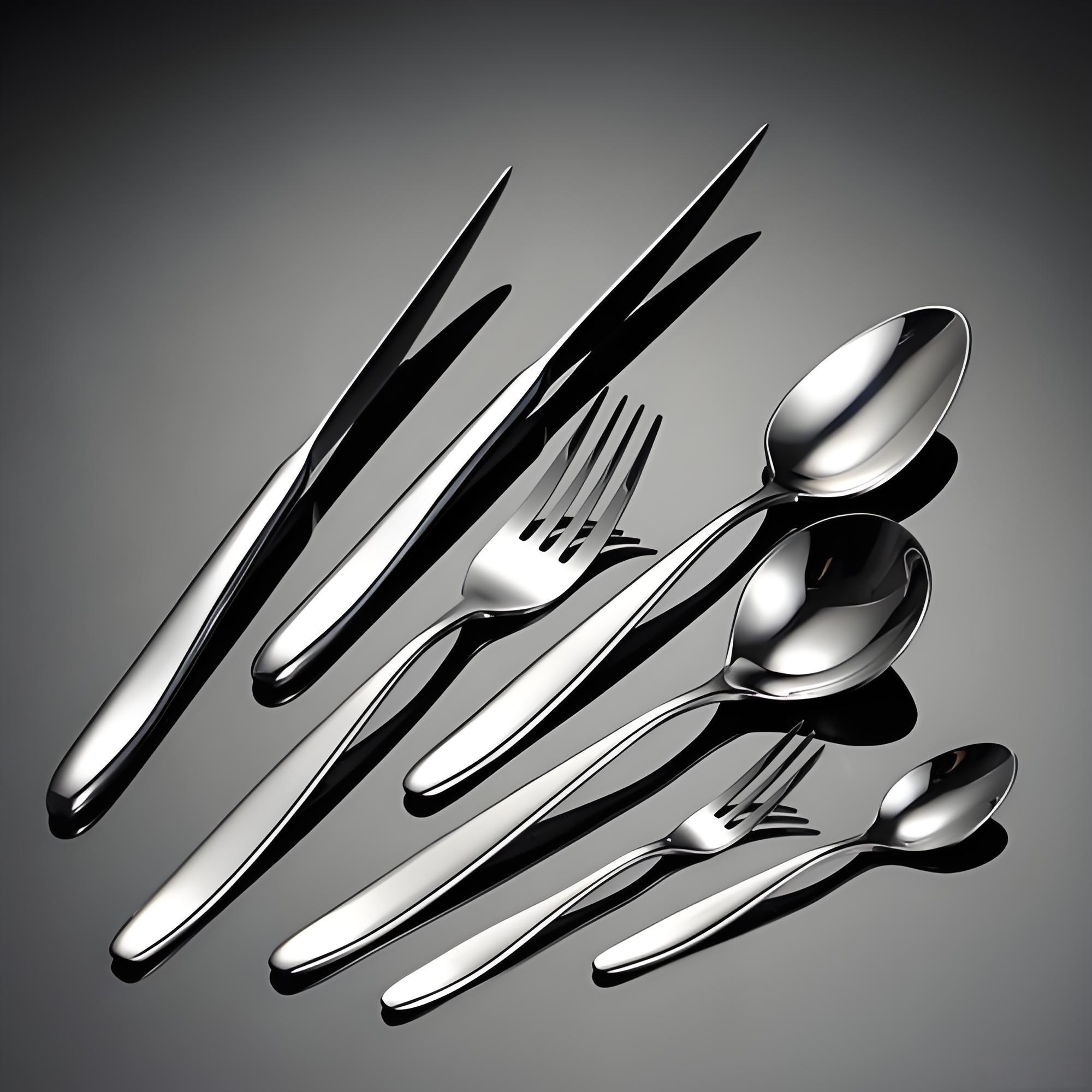
Daily stainless steel flatware is the most representative stamped metal product, fully formed from stainless steel sheets or coils via one-stop stamping processes.Stamped Spoons: The concave bowl shape of spoon heads is formed by precision die deep drawing, which presses flat steel plates into integrated curved structures. Custom logos and decorative patterns on spoon handles are not engraved, but embossed under high mold pressure for clear, durable surface detailing.Stamped Forks: Fork teeth are completed by stamping blanking, cutting off excess metal materials to form standard gaps. The slight curved radian of fork bodies for easy food scooping is realized through precision stamping bending, ensuring comfortable use and uniform product radian.Stamped Knives: Unlike heavy forged knives, stamped steak knives and fruit knives are thin, lightweight and cost-effective. They are directly punched and shaped from integral steel plates. With low production costs and high yield, stamped metal knives fully meet large-scale commercial and household kitchen demands.
2. Hollowware – Classic Deep Drawing Stamping Products
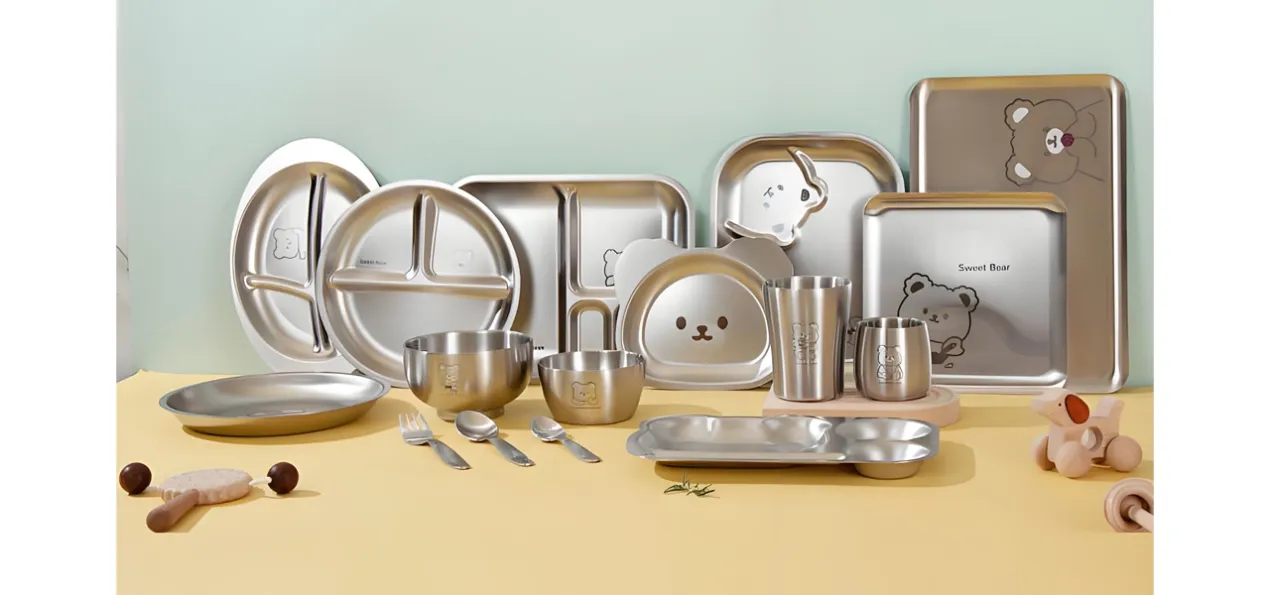
Stainless steel bowls, basins and vacuum cup liners are textbook-level applications of stamping deep drawing technology, realizing seamless integral hollow forming.Stamped Bowls & Basins: Flat circular steel plates are pressed and deeply stretched by large stamping equipment, gradually forming standard hollow bowl structures. The final edge curling process rounds sharp metal mouths, eliminating burrs to ensure safe, scratch-free use.Deep-Drawn Cup Liners: Ultra-deep cylindrical insulated cup liners require multi-stage progressive stamping. Step-by-step deep drawing avoids metal cracking, achieving integrated seamless deep cavity structures for vacuum insulation parts.
3. Cookware Stamping Components
Although high-end cookware bodies adopt composite steel integral forming, almost all supporting accessories rely on durable precision stamping parts.Stamped Pot Lids: Full-metal pot lids and stainless steel edging for glass lids are standardized stamped products with stable size and perfect fitting performance.Stamped Handle Brackets: Metal connecting bases for pot and wooden handles are thick-plate stamped parts, fixed by spot welding. They feature high structural strength, capable of bearing the full weight of loaded cookware without loosening or deformation.Perforated Steam Grids: Dense uniform ventilation holes on kitchen steam grids are rapidly processed by CNC precision punching stamping, ensuring even steam circulation for efficient cooking.
4. Stamped Kitchen Gadgets
Various functional kitchen small parts adopt professional metal stamping processes to achieve special structural and performance requirements.Stamped Graters: Specialized composite stamping technology punches dense holes and lifts hole edges to form sharp cutting surfaces, realizing efficient vegetable grating functions with integrated metal plates.Stamped Bottle Openers: Lever-type bottle openers are stamped from thick high-hardness steel plates. The molded structure is sturdy and deformation-resistant, supporting long-term repeated use.
Why the Tableware Industry Relies on Metal Stamping
Superior Food-Grade Hygiene: Stamped tableware parts are integrally formed with no gaps or weld seams. Smooth seamless surfaces avoid dirt and bacteria accumulation, are easy to clean, and fully comply with food safety standards, unlike welded products with residual gaps.Ultra-Low Mass Production Cost: After one-time mold opening, stamping production completes one finished tableware piece per second with high material utilization. It drastically reduces unit costs, making affordable stainless steel tableware accessible for households and catering industries.Strict Batch Consistency: Stamping mold production ensures identical size, radian and structure of each spoon, fork and plate. It meets standardized stacking and unified matching requirements for large-scale restaurants and catering chains.Diversified Surface Decoration: Stamping molds support integrated forming of mirror, frosted and relief patterns on metal surfaces, enriching tableware textures and improving product grade without secondary processing.
Summary
In the tableware industry, mature metal stamping technology converts cold rigid steel plates into practical, beautiful and safe daily kitchen necessities. Deep drawing turns steel sheets into seamless bowls, blanking forms standard fork teeth, and embossing creates exquisite surface decorations. Reliable, low-cost and high-precision stamped metal parts enable durable, affordable stainless steel tableware to replace fragile porcelain and expensive silverware, becoming the mainstream of modern dining scenarios.